Commercial interiors need surfaces that support both presentation and daily performance. Designers may specify aluminium battens where a ceiling, wall or façade needs clean directional detail. In spaces where warmth and sound control are priorities, a wood wool ceiling can help soften the room. For high-traffic projects with a sharper finish, an acoustic metal ceiling can support acoustic comfort while maintaining a durable commercial look.
Ceilings are often underestimated in interior design, yet they influence how a room looks, sounds and feels. In busy spaces such as offices, schools, retail centres, hospitality venues and public buildings, the overhead plane is more than a finishing surface. It can help control sound, organise lighting, conceal services and contribute to the overall identity of the building.
The challenge is choosing a system that suits the design intent and the way the space will be used. A quiet meeting room, open-plan workplace, café, corridor and reception area all have different requirements. Some need warmth and texture, while others need durability, access and clean lines. The ceiling should respond to those needs rather than being selected as an afterthought.
Sound Comfort and Everyday Use
Noise affects how people behave in a room. In a workplace, excessive sound can make concentration harder. In a school, it can reduce speech clarity. In a restaurant, it can make conversation tiring. In a healthcare or public building, poor sound control can create stress and confusion.
Acoustic planning helps reduce these issues by considering how sound reflects, spreads and settles within a space. The ceiling plays a major role because it usually covers a large area above the main activity zone. When chosen carefully, it can help create a calmer environment without removing the energy of the room.
Comfort is not only about reducing noise. It is also about making speech easier to understand and helping people feel less fatigued in busy environments. This can improve the experience of staff, visitors, students and customers.
Visual Structure Above the Room
The ceiling also affects visual order. In large spaces, a flat and plain overhead surface can feel empty or unfinished. In highly detailed rooms, the wrong ceiling can make the space feel too busy. A well-selected system can create structure without overwhelming the design.
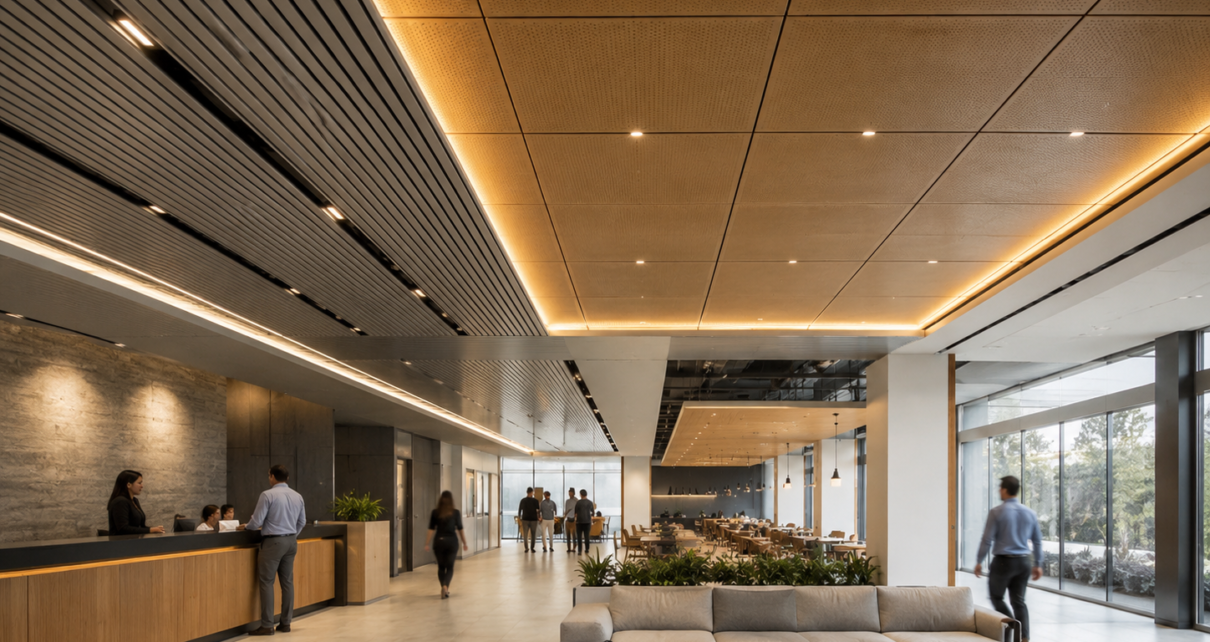
Linear features can guide movement through corridors, define zones in open areas and make a ceiling feel more intentional. Textured surfaces can add softness and depth. Metal finishes can give commercial interiors a clean, precise appearance. Each approach creates a different mood, so the material should be matched to the project’s purpose.
Lighting should also be considered early. Recessed fittings, pendants, track lighting and integrated services all need to work with the ceiling system. If these elements are not coordinated, the finished result can feel cluttered or uneven.
Durability and Service Access
Commercial spaces need materials that can handle regular use. Ceiling systems may need to provide access to mechanical services, support fire and safety requirements, work with speakers or lighting, and remain easy to maintain. A product may look suitable in concept, but it also needs to perform once the building is occupied.
Service access is particularly important in offices, transport environments, education spaces and retail centres. Maintenance teams may need to reach wiring, air conditioning, sprinklers or other systems above the ceiling. Choosing a practical system can reduce disruption and make long-term building management easier.
Durability also matters in areas exposed to frequent cleaning, airflow, humidity or public use. The right finish can help preserve the design while reducing the need for constant repair or replacement.
Matching the System to the Design Brief
Every project has its own priorities. A library may need a calm interior that supports concentration. A lobby may need a strong first impression. A hospitality venue may need warmth, atmosphere and better speech comfort. A public building may need robust materials that can handle heavy daily use.
The best result comes from matching performance, maintenance and design goals early in the specification process. This avoids last-minute compromises and helps the ceiling work as part of the full architectural strategy.
A ceiling should not be viewed as a final cover-up. It can be one of the most important surfaces in the room, shaping sound, lighting, movement and visual quality. When selected properly, it supports both the people using the space and the long-term performance of the building.
Well planned ceiling systems help commercial interiors feel quieter, more durable and visually refined while supporting the way busy spaces are used.