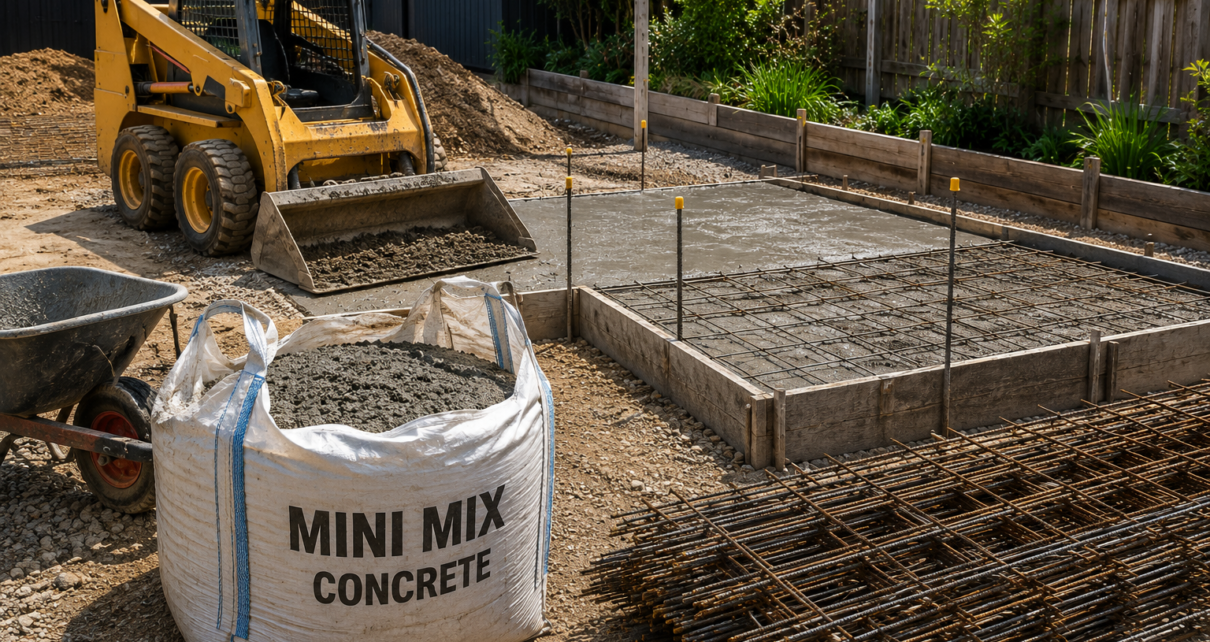
Small outdoor projects can still need careful planning, especially when access, timing and material use all affect the result. For paths, footings, garden slabs and compact repair jobs, mini mix concrete can be useful where manageable quantities are needed. Where extra strength is required, reinforcing steel can support the finished structure, while skid steer hire can help with clearing, levelling and moving materials on tighter sites.
Minor construction work is often underestimated because the finished area may not look large. A small slab, shed base, pathway or retaining section can still involve excavation, ground preparation, formwork, drainage checks and material handling. When these steps are rushed, the finished surface may crack, sink or become uneven sooner than expected.
Good preparation starts with understanding how the area will be used. A path that carries foot traffic needs a different base from a driveway section or a shed foundation. The expected load, soil condition and exposure to water should all guide the setup before any pour begins.
Why Access Planning Matters
Access is one of the first issues to solve on smaller residential and landscaping sites. Narrow side paths, fences, established gardens and uneven ground can make it difficult to move soil, gravel or building materials by hand. Without the right equipment or delivery plan, a simple job can take longer and create unnecessary mess.
A compact loader can be useful where larger machinery cannot enter. It can move soil, clear old material, spread base layers and assist with levelling. This reduces manual labour and helps keep the work area more controlled. It also makes it easier to prepare the ground consistently before the next stage begins.
Before machinery arrives, the site should be checked for gate width, overhead clearance, soft ground, underground services and safe turning space. These details help prevent delays and protect existing landscaping or structures.
Preparing the Base Correctly
The base layer has a major impact on the long-term performance of concrete work. If the ground underneath is too soft, uneven or poorly compacted, the surface above may move over time. This can lead to cracking, pooling water or edges that break away under pressure.
Excavation should remove unstable material and create enough depth for the base and finished surface. A compacted foundation helps spread weight and gives the slab or path stronger support. Levels should also be checked carefully so water moves away from buildings, fences and low garden areas.
Formwork is another important step. It sets the shape and height of the pour, so it needs to be firm, straight and secure. Poorly supported edges can shift during placement, leaving the finished work uneven or difficult to finish neatly.
Strength and Finish
Not every concrete area needs the same level of structural support, but areas exposed to weight, movement or regular use should be planned carefully. Steel mesh or bar can help strengthen the finished work and reduce the risk of major cracking. It needs to be positioned correctly within the slab rather than sitting directly on the ground.
Finishing also matters. Outdoor surfaces should be practical as well as clean. A smooth finish may suit some areas, while paths and outdoor access zones may need more grip. The final texture should match how the space will be used in wet and dry conditions.
Weather conditions should also be considered before the work starts. Very dry ground may need light preparation so the base compacts properly, while wet soil can make excavation harder and affect the stability of the area. Planning around the forecast helps avoid rushed decisions and gives each stage enough time to be completed neatly.
Clean-up and material placement are also part of a good site plan. Keeping tools, offcuts and excess material organised reduces trip hazards and makes the work area easier to manage. It also protects nearby lawns, garden beds and paved areas from unnecessary damage during the project.
Small outdoor projects work better when access materials and site preparation are planned before concrete work begins.