
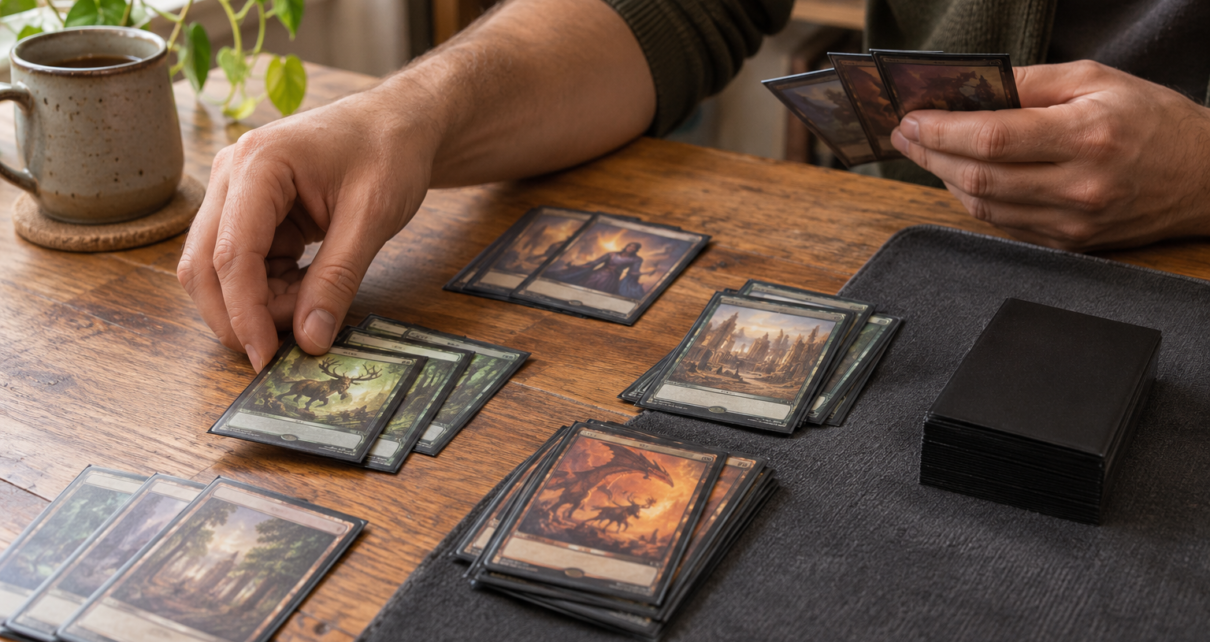
An Australian player searching for magic the gathering au can find plenty of cards before deciding what sort of deck they want to play. A better starting point is to pick a favourite card and work out what it needs around it to do its job. That gives players a way to sort the mtg cards they already own into cards they can use straight away and cards they might save for another deck. A few practice games can then show where the gaps are. Once those gaps are clear, shopping for mtg singles is a practical way to fill them.
Give the deck a plan
A good starting plan fits into one sentence. A player might want to get several small creatures onto the battlefield early and make them stronger together. Another might prefer to slow the game down and keep the board under control until they can play a larger threat. Those plans call for different cards, even when the decks share a colour.
It also helps to settle on a format before sorting the collection. A deck built for a casual game around the kitchen table may need changes before it can be played at a local shop event. Knowing what the group plays gives the builder a clear idea of which cards are eligible and what sort of games to expect.
Once the plan is set, the player can look at what each card does when the favourite card is still in the deck. A spell that strengthens a group of creatures is handy when the deck reliably puts several into play. If the deck regularly has an empty board, another creature may do more to help the plan along.
Check what the deck can do in the first few turns
Sorting spells by mana cost makes it easier to spot a slow start. A deck can look strong on paper when its most impressive cards are laid out together. In a game, those same cards can sit in hand for several turns while an opponent builds a board. A few useful early plays can give the deck time to reach the cards it was built around.
Players can learn a lot by shuffling and drawing several practice hands. For each hand, they can lay out their first few turns and see whether their lands produce the colours they need, whether they can cast their early spells and whether they still have something to do on the next turn. If an early spell repeatedly gets stuck in hand because it needs a particular colour, the mix of lands is worth checking before that spell gets cut.
Use practice games to guide changes
A short note after each game is often enough to guide an adjustment. “Had creatures but couldn’t get an attack through” gives a player something specific to investigate. They can look at whether a spell that removes a blocker would help, or whether the deck needs a threat that can attack from a different angle. The best fit depends on what the rest of the deck is already doing.
Repeated problems deserve more attention than a single awkward draw. If a player keeps running out of cards after a strong start, they can try swapping one of their least useful spells for a card that helps refill their hand. Keeping the first round of changes small makes it easier to see whether the swap helps across the next few games.
A spending limit can also make the choices simpler. Before buying a costly card, a player can test a card they already own that does a similar job in casual practice. If that change helps, they have a clearer idea of what they would be paying to improve. If the same trouble keeps coming up, they can revisit the deck’s plan and see whether it asks too much of a single card.
A focused deck is easier to play, test and improve when every card has a job and each change solves a problem that came up during a game with friends.