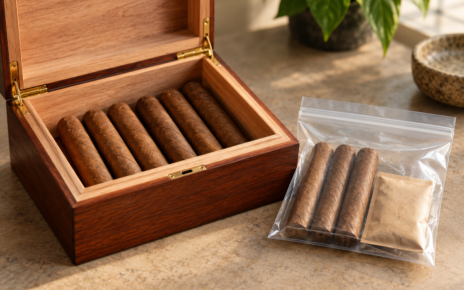
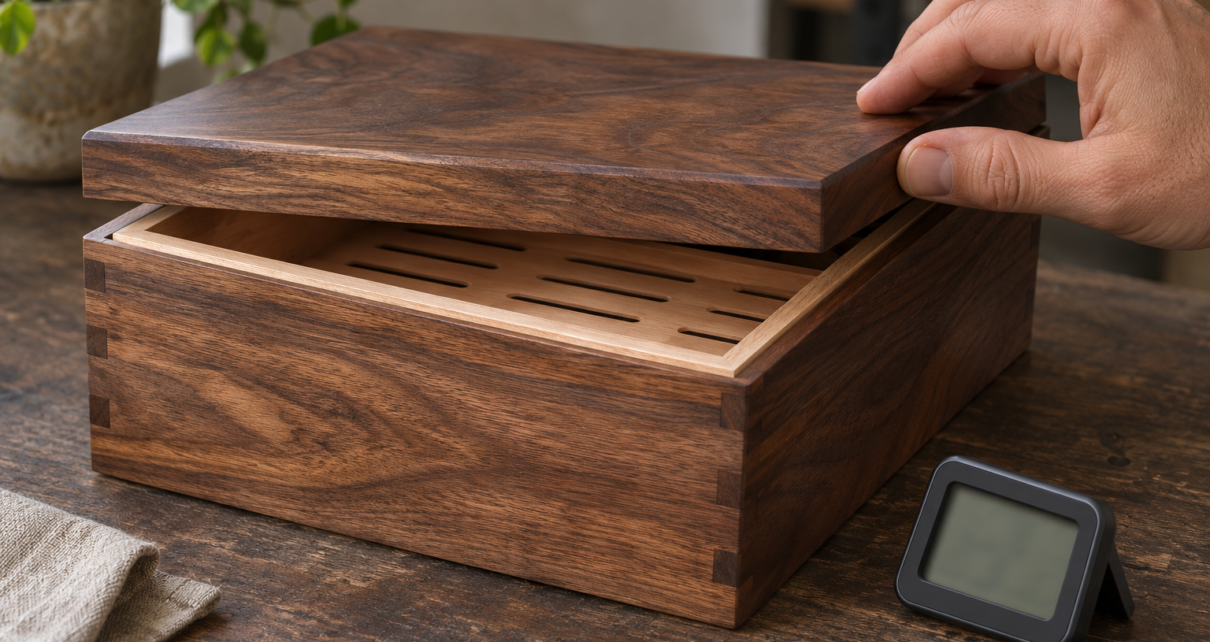
A low reading can be frustrating for anyone who has already added boveda humidity packs to a wooden humidor. Checking the hygrometer, lid seal and humidity packs helps humidor owners work out why moisture levels keep dropping and what to adjust first. For anyone browsing results for Buy Cigars Online, taking a few readings over several days can show whether the box is holding steady before a delivery arrives.
Check whether the reading is reliable
The hygrometer measures relative humidity inside the box. Both analogue and digital models can drift over time, so a consistently low reading is a reason to check the instrument before changing the setup. A calibration kit provides a known humidity level against which the owner can compare the display. The kit and the hygrometer may have separate instructions, so it helps to check how long the test takes and whether the device allows an adjustment.
Timing matters too. Opening the lid lets room air in, so the number on the display can move during a check. An owner who can read the display with the lid closed can record readings at roughly the same time each day. If the display is inside the box, a quick reading on first opening gives a more consistent comparison than one taken after the lid has been open while the contents are rearranged.
A simple log can capture the humidity, the room conditions and anything that changed that day. A reading that dips after the lid has been open for several minutes tells a different story from a gradual decline over several days. That distinction can help an owner decide whether to investigate the seal or look at a recent change inside the box.
See whether the lid closes evenly
A wooden box can struggle to hold humidity if air regularly escapes through a gap around the lid. A loose tray, a pack in the wrong spot or something caught near the hinge can prevent the lid from sitting flush. Owners can remove anything that might be obstructing it, close the box gently and look along the front and sides for obvious gaps.
If the lid looks uneven, one simple check is to close it gently over a thin strip of paper at several points around the rim. The paper may slide out freely at one corner and meet some resistance elsewhere. That difference can help locate an area worth inspecting. A quick look at the hinges can then reveal whether the lid sits slightly off-centre or catches just before closing.
The location of the box is another variable worth recording. A humidor on a sunny windowsill or next to an air-conditioning outlet experiences more changes in its surroundings than one on a shaded shelf away from direct airflow. Moving the box to a more stable spot and keeping the rest of the setup consistent makes it easier to see whether the location was contributing to the swings.
Check the wood and the humidification setup
A new wooden humidor, or one that has sat empty and dry for a long time, can absorb moisture from the air inside it. Seasoning lets the wood take up moisture before the box goes back into regular use. Owners can follow the manufacturer’s instructions for their model, which may call for an empty box and a separate seasoning product. Once that process is complete, the box can return to its usual storage setup.
For a seasoned box that has started running dry, the next step is to check the size, number and condition of the packs. The manufacturer’s sizing guide accounts for the humidor’s capacity, so a box that is half full can still need the quantity specified for its full capacity. Packs in the same box should have the same relative humidity rating, and a pack that has become rigid should be checked against the manufacturer’s replacement guidance.
A drop can also follow the addition of several dry cigars at once, particularly if the box had been stable until then. Recording when they went in alongside any pack changes makes it easier to narrow down the cause. Once the likely cause has been addressed, a few days of readings under similar conditions can show whether the humidity has settled.