A successful photo shoot starts with equipment that suits the assignment, and camera rental can help photographers access a different body or lens for a specific project. The first step is identifying what the shoot requires, from the available light to the distance between the photographer and the subject. For photographers comparing camera rental perth options, compatibility and collection times deserve as much attention as the equipment specifications. Existing gear also needs a careful check before the day, particularly if it has developed an intermittent fault. Arranging camera repairs perth services early gives photographers time to have problems assessed and organise alternative equipment where necessary.
Good preparation does not mean packing every available accessory. It means choosing a manageable kit, checking that each component works and allowing enough time to become familiar with anything new.
Match the Equipment to the Assignment
The subject and setting should guide equipment choices. A family portrait session in a small studio presents different challenges from an outdoor sporting event or a property interior.
For portraits, the photographer needs enough working distance to frame the subject comfortably. A lens that works well outdoors may feel restrictive in a small room. Before choosing equipment, it helps to establish the size of the location, the intended compositions and whether individual portraits or larger groups are involved.
Sport and wildlife work often require attention to subject distance, autofocus behaviour and handling over longer periods. A longer lens may bring distant subjects into the frame, but its weight can make a monopod or other support worth considering.
Video assignments introduce further questions. Recording duration, sound capture, stabilisation and power requirements can all affect the kit. A camera that produces attractive short clips may still need additional accessories for an interview or an extended recording session.
A written shot list helps connect these choices to the actual brief. It also reduces the temptation to hire equipment that adds complexity without helping deliver the required images.
Check Compatibility Before Collection
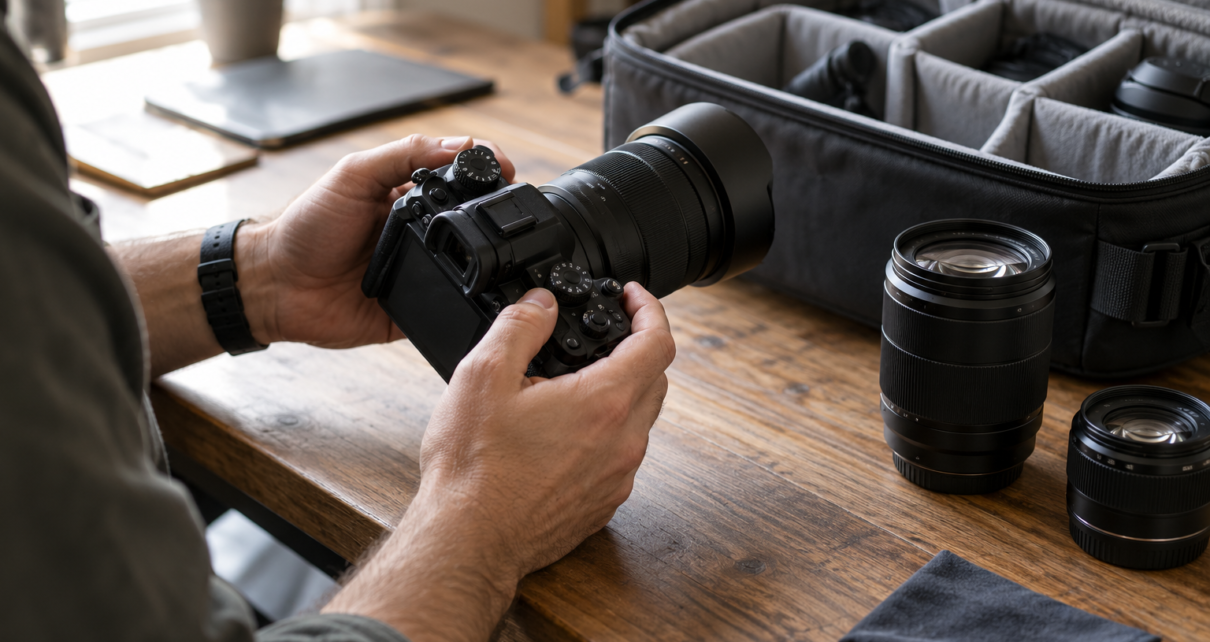
A suitable camera body and lens are only part of a working setup. Lens mounts, batteries, memory cards, flash triggers and support equipment all need to work together.
Photographers should confirm the exact models being supplied and ask what is included. A kit may contain a battery and charger, but additional batteries, cards or cables may need to be arranged separately. Collection and return times should also leave room for testing and travel.
Adapters deserve particular attention. Physical fit does not necessarily mean every function will operate as expected. Autofocus performance and electronic controls should be checked with the intended combination before an important assignment.
Memory cards also need to suit the selected recording settings. Rather than relying on capacity alone, photographers should check the camera’s stated card requirements and allow enough storage for the planned workload.
Test the Complete Setup
A short test session can reveal problems that a quick inspection misses. The most useful test follows the way the equipment will actually be used.
For still photography, this could involve photographing a moving subject, checking focus at different distances and reviewing files on a larger screen. For video, it could mean recording a sample at the intended settings, listening to the audio and checking how the files transfer to the editing system.
The test should include accessories. A loose tripod plate, missing cable or unreliable flash trigger can interrupt a shoot even when the camera itself works perfectly.
Familiarity matters too. Photographers using an unfamiliar body should locate essential controls, check file formats and practise changing exposure and focus settings. Learning these steps beforehand keeps attention on the subject during the assignment.
Inspect Existing Gear and Plan Reliable Backups
Equipment already in the camera bag deserves the same attention as hired gear. Batteries should be charged, contacts checked for visible contamination and lenses inspected for damage or obvious image problems.
Recurring error messages, unreliable buttons or unexpected shutdowns should be assessed before the shoot. Attempting an unfamiliar repair immediately before an assignment can create further difficulties. Any servicing also needs enough time afterwards for the photographer to check the equipment again.
Backup arrangements should reflect the consequences of an interruption. A repeatable product photograph may allow time to troubleshoot, while a wedding ceremony or live performance offers fewer second chances.
Depending on the assignment, useful backups may include spare batteries, additional memory cards, an alternative lens or a second camera body. The photographer should also establish how files will be copied and checked after the session.
The final preparation is a simple packing check against the shot list. With suitable equipment, tested settings and practical backups in place, the photographer can spend more time observing the scene and making deliberate creative decisions.